0

.jpg)
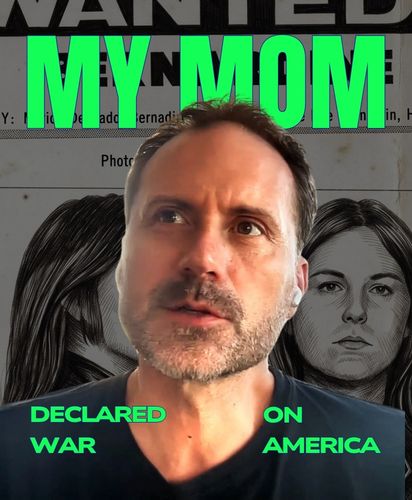
In June 2024, a federal jury in West Palm Beach found Chiquita Brands International liable for financing the Autodefensas Unidas de Colombia, a right-wing paramilitary group the U.S. State Department had listed as a terrorist organization. The award was $38.3 million, split among eight families. It arrived 17 years after the litigation began.
Dr. Terry Karl is the Gildred Professor in Latin American Studies, Emerita at Stanford University and an international war crimes and human rights investigator. She left academia to do this work full time. Chiquita fought to keep her off the stand and lost.
In this inaugural episode of Wrongheaded News & Tea, she walks Sean Nevins through what the plaintiffs proved: that Chiquita's payments were not extortion but a commercial partnership; that company ports moved cocaine to Europe and took delivery of AK-47s labeled as rubber balls; that as peasant families fled paramilitary terror, Chiquita bought the land they left behind. She also explains the legal improvisation that let Colombian law be argued in an American courtroom after the Supreme Court had closed every conventional door.
Eight families went to trial. Earth Rights International represents roughly 4,500 victims.
The following transcript has been edited for length and clarity. Bracketed text is editorial.
Terry Karl: He is tortured, killed, decapitated, and his family finds his body. Okay, that's John Doe number nine. That family has not only lost their loved one, they've also lost the ability to survive in this region. And you can imagine who stays around for that.
There were some Americans, and Chiquita settled with the Americans — but not with the Colombians.
Sean Nevins: Today I'm sitting with Professor Terry Karl. She is the Gildred Professor in Latin American Studies, Emerita at Stanford University and an international war crimes and human rights investigator. She joins us now from San Francisco. Welcome, Dr. Karl.
Karl: Thank you for the invitation.
Nevins: I want to cut to the chase and ask: should we be buying Chiquita bananas?
Karl: As a person participating in the trial, I'm not quite able to call for specific political actions. But I can tell you the following. A jury in Florida rocked the international community, the human rights community, because it held the global giant Chiquita Brands — formerly known as United Fruit, which has had several iterations and several other names — liable to the tune of $38 million for the deaths of eight Colombian citizens.
It's a pretty historic verdict. It took two decades of litigation. It may be the first time a major U.S. corporation has been held liable in an American court for injuries to foreign nationals. In other words, it's really the first time a court in the United States has ruled on how a U.S. multinational may treat foreigners in the countries and areas where it operates overseas. And in that sense, it found that Chiquita was liable for murder. So I can't really answer your question, but your viewers can decide what that means for them.
Nevins: That makes total sense. Maybe I shouldn't have asked. Do you mind backing up and giving a general summary of what's going on?
Karl: There is a major trial that just occurred, and it set a very important precedent. It found Chiquita Brands — a major U.S. multinational and produce producer, among other things — liable for paying a paramilitary that subsequently killed banana workers, union organizers, union members, people who lived in the banana areas. The areas where Chiquita was taking its bananas. The areas that Chiquita owned. The banana plantations that Chiquita owned.
It found the company liable for making payments to an ultra-right-wing paramilitary group called the Autodefensas Unidas de Colombia — that's the AUC — a group that was listed at the time as a terrorist organization by the U.S. government.
It found them liable for paying them, and they subsequently committed a whole series of crimes in the banana areas: to protect the property of banana plantation owners, to hurt banana workers, to kill families of banana workers or anyone they thought might be raising demands about better pay, better conditions, and so on — which the AUC considered communist.
Nevins: And what is your role in all of this?
Karl: You have to understand this is 17 years of litigation. And in 17 years, most of it was a legal fight over whether or not this trial could actually happen — and under what auspices, what law.
My role was to work with attorneys, review documents, write reports. I was deposed by Chiquita. Chiquita fought very hard to keep me out of the trial. In the end, the most important thing was to put the story of what had happened on the record and document it using material from a whole range of sources.
I think the most important part was to look at what's called pattern and practice. How has Chiquita, in its various iterations from the United Fruit Company as early as the end of the 1800s to now, actually worked in other countries? What kinds of tactics did it use? Most famous, of course, is the 1954 overthrow of the Guatemalan government, which United Fruit was very involved in. So there was a history that was important, and there was current documentation that was important.
But I want to be very clear: when you have 17 years of litigation, this is a huge effort by a lot of people. I am not the most important of those people by any means.
Karl: The most important thing was to answer what Chiquita was claiming. Chiquita claimed it paid this paramilitary because it was being extorted by them — that the AUC threatened to kidnap its executives, damage its plantations. That was their argument. An extortion argument.
Our argument was: you formed a deal, a pact, an agreement with this paramilitary, because this paramilitary was formed by big agricultural interests, including domestic banana plantation owners in Colombia. They wanted to stop the unions. They wanted to fight anyone they assumed was a member of a guerrilla organization. They wanted to make sure the price of bananas stayed down, that the cost of labor stayed down, that their own plantations were secure. And Chiquita, as the largest landowner in the banana regions of Colombia, basically made a deal with them.
So there are two different interpretations, and the question is: what are the facts that support one interpretation over another? In Chiquita's case, they were unable to produce one single piece of evidence that anybody extorted them. Not a paper. Not a meeting. Not a thing.
Nevins: Wow.
Karl: No internal document. And we're talking about reviewing two million documents. When you have two million documents, somewhere in there somebody is going to say, "Oh my god, the AUC is extorting us." They may not use that language, but they couldn't produce a single thing. Whereas the plaintiffs could produce a lot of evidence showing that Chiquita had actually made a deal with the AUC.
Nevins: Is there any legitimacy behind the AUC here, politically? Because the AUC was created in part to push back against the FARC. Correct?
Karl: That is correct. But let's go back a little bit, because your viewers may not know what the FARC is.
Colombia essentially has a long history of violent conflict. That history eventually produced several guerrilla organizations on the left. Originally they were for land reform, workers' rights, raising payments to poor people. They had a whole agenda, and that included the FARC. Later, those organizations — just like the right — become organizations that extract profits from what they do. Both the left and the right, the AUC and the FARC, were involved to different degrees in drug trafficking. It is Colombia.
And so in the banana regions — this is what's so scary about Colombia — if you're looking at the banana regions of [Urabá], Santa Marta, other places, what you used to see is different guerrilla organizations. You saw the formation of the AUC, the right-wing paramilitary, to fight them and to take over the territory where the FARC and the other organizations were operating. You also see that the Colombian military is there in some places, and in other places you see all kinds of armed groups.
What happens is the AUC gets very successful in defeating the former guerrilla movements. They're still there, but the AUC is militarily successful in the banana regions. And remember, the AUC is formed initially and supported monetarily by the big banana plantation owners — and Chiquita is the largest owner of land in the region. So they form this as a way of fighting demands that may or may not be supported by the left, because as I said, it's not quite a left-right story anymore, given the criminality that penetrates all organizations in Colombia at this time due to drug trafficking.
Nevins: So based on everything you just said — this is a very politically tumultuous country — do we have any sympathy at all for Chiquita in the fact that they were paying a paramilitary organization to sort of be stewards of the land?
Karl: No. No, no, no. They weren't paying them to be stewards of the land. Stewards of the land are the banana plantation owners, of which Chiquita is the largest. That's not why they're paying paramilitaries.
The paramilitaries are not kidnapping banana executives. They are not going after the top. They're in a partnership with them. And the partnership is to protect the profits coming out of the banana regions.
Now, the AUC may get money from other sources, and eventually both the AUC and the FARC end up getting more money from drugs than from bananas. But that's down the road. The period at issue in this trial was 1999 to 2004, and a lot changes in that period.
What's so important is this is a deal. This is what Chiquita called the cost of doing business in these banana regions. And what they meant was: if we pay these guys, they will secure the land — and it's our land, because we're Chiquita. And they will also make sure that unions are not formed. In fact, they smashed a union. They will make sure that workers do not have the salaries they need to live.
Karl: What's important about Chiquita, because it's a multinational, is that it moves into Colombia in the middle of huge violence. It had pulled out in 1984. It moves back in 1988, in the middle of huge violence, because it has problems in Central America where workers are also demanding things — particularly Costa Rica. There are also natural disasters and all kinds of other problems in Central America affecting their profits there.
But they move to Colombia because these are perfect lands for bananas. It has always been a banana-producing region. They move back in having pulled out four or five years earlier, and they make a decision that while everybody else is leaving, they're going to come in and buy up the land.
And so they profited in so many ways. At this point in time, the largest number of internally displaced people — and external refugees as well — came from these regions where people were fleeing conflict. A small farmer, a peasant, would leave his land, leave his house, leave his animals, leave everything and run from the paramilitaries. And when they'd run, Chiquita would come in and get the land.
If it got the land, it might get it through judicial maneuvering that gave them a title at the end — what they call judicial architecture, because they had to make a kind of legal structure over this. But you've got hundreds of thousands of people fleeing this area and leaving their land, and then Chiquita becomes the largest landowner.
Nevins: Are there cases now where they're trying to get their land back?
Karl: Oh yes, absolutely, in Colombia. They have to show this. And Chiquita did leave Colombia eventually. Chiquita is not in Colombia anymore. It's out for this reason among others.
EarthRights International, representing the families of victims, has 4,500 families.
Nevins: Four thousand five hundred. Wow. And there were only eight in this trial. The eight — this is a bellwether trial, is that correct?
Karl: What a bellwether trial means is that you identify illustrative cases. You can't bring 4,500 people to Florida — especially if you're an NGO that doesn't have a lot of money.
Nevins: And the plaintiffs — are they Colombian citizens? Are they also U.S. citizens?
Karl: No, they're all Colombians. What's interesting is there were some Americans, and Chiquita settled with the Americans but not with the Colombians. It divided the Americans off, made a settlement where Americans were victims of these actions, but it would not settle with the Colombians.
And if you look at who these Colombians are — they're John Does, so we can't name them. But take John Doe number nine. A man who is the only support of his family. He is a labor organizer. He is tortured, killed, decapitated, and his family finds his body.
That's John Doe number nine. That family has not only lost their loved one, they've lost the ability to survive in that region. And you can imagine who stays around for that. What family stays around for that?
The plaintiffs in this are all people like that. People who were killed in the most awful ways. The thing about the AUC is that its leadership believed at the time that the more brutal the killing, the more horrible the decapitation, the more torture there was, the more people would flee the area. And they saw all of these people as members of the FARC, as members of guerrilla organizations. They weren't. They lived there. They produced bananas. They organized. They were peasants. Most of the plaintiffs are poor people who may have owned a little tiny piece of land. They're not big Chiquita landowners.
Nevins: You said EarthRights International has 4,500 people they're representing. But when you describe the type of person involved in this, I imagine there are likely many more who have never come forward, or don't have a connection to an NGO.
Karl: The only way you can have a case like this is if you have a huge team, some of them with very strong connections between Colombia and the United States. You wouldn't be able to find these things out otherwise.
Karl: I think this trial only hit the tip of the iceberg. It's so important because the cases are bellwethers, they're illustrative, there's more to come. But when I say it only hit the tip of the iceberg — Chiquita was found responsible for paying $1.7 million to the AUC at a time when the AUC was forming. That was very important money at the beginning, helping it consolidate itself.
But we don't know how much they actually paid. The team has checks that show $1.7 million in payments. That's the evidence, or some of the evidence. We don't know if there are other checks or other forms of payment. And I'll give you examples of other forms of payment.
One way to benefit, as I said, was just taking over somebody's land, and suddenly the land is Chiquita's land. But another way to benefit is that the AUC was using Chiquita ports to export drugs to Europe — in particular, mostly to Germany, I believe.
Nevins: Wow.
Karl: And in return, they were unloading AK-47s at the port. In Chiquita ports. How often did that happen? I cannot tell you, nor can any of us, I believe. But we do know of several instances. We know they got a whole huge number of crates with AK-47s and ammunition so they could fight in the banana regions and commit the terror the AUC did commit. We know they came in marked, in Chiquita ports, as if they were rubber balls. Not guns. Rubber balls.
So how many ways did the AUC benefit from Chiquita? Who knows.
Nevins: Are there whistleblowers in this case? I can just imagine you're working for a banana company and then you're watching guns come off a ship, and sketchy people possibly sending drugs.
Karl: I don't think whistleblowers are the key to this case. Besides the incredible legal teams that spent 17 years trying to find a way to hold Chiquita accountable in the United States, I think there are two keys.
Remember, the Supreme Court was limiting human rights law over and over, and kept throwing out the normal avenues people would have used for litigation in a U.S. court. The Torture Victim Protection Act, for example, is one way. Another is the Alien Tort Statute. These are legal mechanisms to hold people accountable for crimes against humanity, war crimes. Those got thrown out. So first of all there's this huge legal work.
But what's more important is the Colombians themselves. The Colombians started a peace process to demobilize the AUC and the FARC and the ELN and other guerrilla organizations. In that peace process they set up a mechanism — it's not called truth and reconciliation, it's called truth and recognition — where if you publicly recognized what had been done, there was some leniency in terms of being held accountable inside Colombia. What that meant is that a number of major AUC leaders talked about their deal with Chiquita.
Nevins: Oh, wow.
Karl: That's one mechanism. The second mechanism that's really important — although it wasn't set up to be — is the Department of Justice. There was a DOJ case prior to this that led to this case, in which Chiquita was fined, I think it was $25 million, for its partnership with the AUC, because the AUC was a terrorist organization and you're not allowed to traffic with terrorist organizations. At least officially.
The fine was small, and they didn't do anything for the victims. That wasn't part of the DOJ story. The story was: you are a bad corporation, you dealt with a terrorist organization, we're trying to do drug enforcement in Colombia, and we're going to hold you accountable for that. But it didn't have anything to do with the victims. Nothing.
The reason it was so important is that the Department of Justice produced a huge number of documents that were very important in this trial. So the combination of what Chiquita handed over, what the DOJ handed over, what the Colombian truth and recognition process handed over, what the victims themselves and their families testified to, and what were called the Chiquita Papers — classified U.S. government documents eventually made public through the Freedom of Information Act and the National Security Archive — all of those things produced almost too much information. Part of the problem was finding the needles in the haystacks, if I can put it that way.
Nevins: I'm in Japan, so I wonder how this news has been received in the U.S. Looking it up, you can see it was covered everywhere.
Karl: It has been very well covered — more than most trials ever are. Although I sometimes think some of the most important things are not covered.
Nevins: What do you mean by that?
Karl: Well, the ability of the lawyers. When you're in the Eleventh Circuit in Florida, this is not exactly a human rights court. And they're throwing out every law you could ever use. Nope, can't use that one. Nope, can't use that one. These are the laws that people like me — who investigate human rights crimes, document them, and sometimes testify — have always used. The Torture Victim Protection Act. The Alien Tort Statute. They just kept throwing those out.
Karl: So there was a lot of legal creativity, and that meant other doctrines that hadn't been used in a long time permitted the lawyers suing Chiquita to use Colombian law in U.S. courts.
Nevins: Oh, wow.
Karl: And that's really important, because that doesn't usually happen.
Nevins: I didn't understand that either, even reading through the law blogs.
Karl: The law blogs don't show you. Some of this is very important because it expands the legal repertoire for people who want protections against human rights violations. Forbes said it best — I can't remember the exact quote — but essentially, it's a shot across the bow of other multinationals doing really bad things abroad. If they're doing things that violate the laws of the country they're in and U.S. law, this verdict should scare them.
Nevins: And it helps out victims in a country with a defunct legal system as well.
Karl: Colombia doesn't have a defunct legal system. It actually has one of the most developed legal systems in Latin America, which is why the laws are so good in Colombia on certain things. That doesn't mean they're implemented. They just happen to be on the books.
What was true in this case is that anybody testifying or suing Chiquita was risking their life. The plaintiffs, the families who had the courage to come forward and say "we want justice" — those people could not be guaranteed safety to pursue this in Colombia.
I was actually in Colombia when the verdict was announced. And the very first thing the president of Colombia did was tweet, "Why isn't this trial in Colombia?" Of course, he's right. In a perfect world it would be in Colombia. But why are people named John Doe nine? Why is John Doe nine — the man who was decapitated and tortured and murdered — why is his name not known? There's a reason for that. It's protection against retaliation.
Nevins: I was thinking about a multinational working in a country like Syria — that this case opens up other potential cases against multinationals for crimes committed abroad.
Karl: Maybe there is a U.S. multinational operating in Syria right now. What's different in the Middle East — this is an agricultural story. The commodity is bananas. The product is food. Where you see many more questions about the behavior of companies in the Middle East is really in oil and mining. And increasingly we're going to be seeing it in lithium as well.
Nevins: And lithium. Okay.
Karl: I say lithium because lithium is only located in certain places. Very few. And you need it for everything that allows us to talk to each other — our computers, our cell phones. It's for batteries, really. And probably the largest source is in the Congo, and that's not a peaceful place. [Editor's note: the Democratic Republic of the Congo is the world's leading source of cobalt, a key battery mineral; the largest lithium reserves are in the South American "lithium triangle" and Australia. The DRC's Manono deposit is among the largest untapped hard-rock lithium resources.]
Nevins: I think it also helps us as consumers demand more from the corporations we're buying things from.
Karl: And I should say — corporations are always going to try to keep labor costs down. That's how they operate. But to my knowledge, Dole, another large banana company, did not do this. It's Chiquita that hired the paramilitary. It is not Dole. It is not Del Monte. It is not the other large corporations that were operating in the banana regions and decided to sell their lands and move out and go somewhere else, because you couldn't operate there. That's when Chiquita said, "Nope, we're going to do it this way instead." And that's what really distinguishes Chiquita in this story.
Nevins: I can almost imagine a board meeting where they're saying, this is a potential opportunity, an opening. All the other brands are out. We can take over the country almost — and we did it in 1928, we did it before that. [A reference to the 1928 banana massacre in Ciénaga, Colombia, in which the Colombian army killed striking United Fruit workers.]
Karl: It wasn't a country as much as it was these regions. Colombia is a big country. It has regions that are very hard to get to, very hard to monitor. It's one of the reasons it was a center for drug production, for laboratories and moving product. That's why the original narco-traffickers were in Colombia. Now they're in Mexico. They used to be in Colombia. This is territory that's not so easy to govern, and it isn't easy, when you get outside the big cities, to monitor what's happening.
Nevins: When I asked how it was received in the U.S. — it was covered well. But I'm thinking about the average consumer. I searched "Chiquita protests." Nothing came up.
Karl: No. Nobody called for a boycott, because that is not in the purview of a trial team.
Nevins: Right. I'm just thinking — if it's being covered everywhere, I don't know, the average college student, they're on the campuses now for other reasons.
Karl: They're looking at the Middle East right now. They're looking at Palestine. We seem to be a one-issue country when it comes to college students, and right now it's Israel and Gaza on the campuses. They're not looking at bananas.
Nevins: You said you're a full-time international war crimes and human rights investigator. What other things are you working on? What should people be thinking about?
Karl: I also write, because when you do war crimes, crimes against humanity, human rights investigations, there are many that have no chance at all of coming to trial. Coming to trial is the unusual case. Impunity is the norm. Any kind of justice is unusual. Very unusual.
And you can imagine how unusual it is in this case — 17 years of litigation, lawyers in Ohio and Florida and this place and that place, then EarthRights International, then you start calling in academics. This is not easy stuff to put together. Those teams were persistent. They never stopped. They never gave up.
I came in late. I came in when it looked like there was really going to be a trial. From 2007 to, I would say, maybe 2018, it didn't even look like there was going to be a trial, because everything kept getting thrown out. So it's those people. It's the persistence of the plaintiffs. It's the guts of the plaintiffs. It's always the courage of the victims and their families that promotes the search for justice. Whether they get it or not is unusual.
And I actually don't know of any other academic who left academia to do what I do. I don't know anybody who does it.
Nevins: You left for this reason?
Karl: I left Stanford early to do this, yes.
Nevins: Wow. That's commendable.
Karl: Understand, I love teaching. I love teaching. But you can't manage this and manage teaching, because if you're going to pursue court cases, they have a schedule that is not the academic schedule. You can't leave a class with 125 students or 200 students and walk out and say, "Sorry, I'm going to testify, I'll be back in six weeks."
So there are many difficulties in these trials. For the lawyers, it's their job. For academics, it's not — it's not what's conceived of as a job. Although I think more and more academics should be doing this. I think it's really important, and they should be using their expertise for the pursuit of rights.
Nevins: This is a little off, but what about teaching do you like?
Karl: I was both an undergraduate and a PhD adviser, and they're very different. I like that undergraduates challenge you all the time. Why is it this way, why is it that way? They ask you a question and you go, I don't really know, I have to go find out. And they're not afraid to have a point of view in the way PhD students often are, because in a PhD situation you have much more control over what's going to happen in their career.
An undergraduate graduates and doesn't necessarily do academics, doesn't necessarily do political science or international politics. They may become a lawyer and go to law school and all you do is write them a letter and they're gone. Or they may go into a corporation, or into finance. They could do anything. But it means they're in your face a lot, undergraduates, and I like that very much.
I also taught a bunch of courses that were so contemporary. I taught the global politics of human rights. That was a hugely important and popular course, and because of it I got all the foreign students. I got a lot of diversity. I got students coming from everywhere. Students trying to figure out why their parents wouldn't talk about the country they came from.
The same with the political economy of development. People want to know: we left X country because it was sinking. Why was it sinking? Why is Venezuela, the country with more oil under the ground than any other country in the world, the one that had maybe the most precipitous economic crisis in history — certainly twice as bad as our own Depression — and then produces a third of the country fleeing? If you're Venezuelan, you want to know what just happened. Americans want to know. But it was also just the richness of all the things I taught, how many different countries were involved, the students.
Nevins: I ask because I wonder if you yourself should make a platform like this.
Karl: I don't think I'm the interesting thing here. I know everybody wants a hero or a heroine in the United States, but I'm not the interesting thing.
When I was just in Colombia I had to give a talk, and I was on a panel with a lot of victims from successful and not-so-successful cases. What I said was true: if it weren't for you, nothing would have happened. Nothing would have happened.
I mean it when I say impunity is the norm. If you do the Chiquita case, you know why. They're appealing everything. They're burying the information. They're suing everybody. All these delay tactics — and then by the time you get to trial, everybody's dead. That's part of what everybody does in the U.S. system. Stop it, stop it, stop it. Don't let it go to court. That's the key thing. And they can afford it. Most victims' families cannot.
So what I really think — what I have a feeling we all think — is that if it weren't for the courage of the plaintiffs, and the commitment of EarthRights, which really does look at where our food comes from, what's happening in the Amazon, where our minerals come from, what we're using for energy — all these questions that are necessary to ask if we're going to have an earth in the long run — you have to find some organization that's going to do that. Some people who are going to do that. And that's not always the easiest thing either.
Karl: It's not the easiest thing. But as you can see from Chiquita, it can be done.
And when I say impunity is the norm, I also think — I don't know how many trials I've been in, but with the exception of one of the biggest, all of them have been won. That one was the massacre at El Mozote. I testified for four days in Spanish in El Salvador. The day after it became very clear that we were going to find the former high command absolutely guilty, there was a judicial coup, and the president, Bukele, removed at least a third of the judges in the country — including the judge who was overseeing the El Mozote case. That's the largest massacre in contemporary Latin American history.
Nevins: And when was that?
Karl: Not the massacre — you mean when I was there? A couple of years ago. I'm off on the year right now, but it was a couple of years ago when the judicial coup happened. And Bukele is keeping himself in power. [El Salvador's legislature removed the country's top constitutional judges and the attorney general in May 2021.]
Nevins: That's the new superstar president?
Karl: Superstar president. Yeah. That's how he got there. He did a judicial coup, and that's part of how he got there.
Anyway, the reason I say that is: even that was a victory. And I'll tell you why. After all this time — this massacre was in 1981, we're talking 40-some years working on this — even that was a victory, because what the families and the people of El Mozote said over and over again is: this was on television. Everybody covered it. It was on the radio. No more can the military say we didn't do this. Everybody knows they did it.
So for them, the truth was actually more important than the verdict.
Nevins: Thank you for your time. Wonderful speaking with you.
Karl: Thank you.
Wrongheaded News & Tea is a bi-weekly investigative interview series hosted by Sean Nevins and funded entirely by tea sales — no ads, no sponsors, no donors. Support the newsroom.