
0

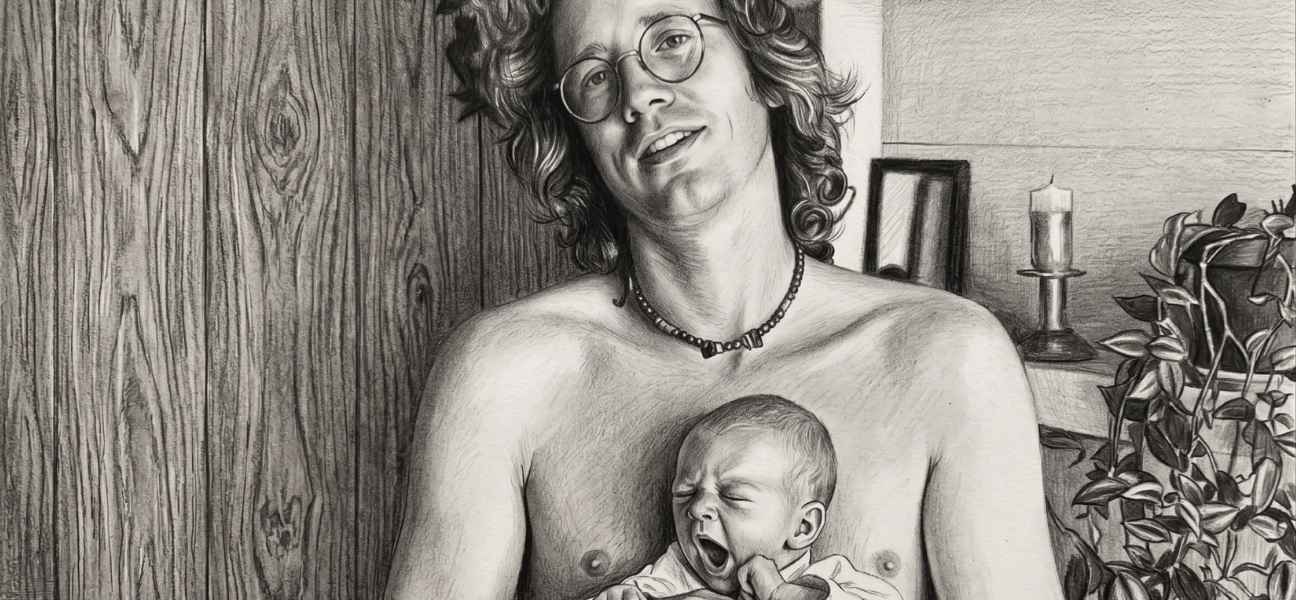
One of Zayd Ayers Dohrn's happiest childhood memories is of a camping trip. His family drove to Alderson, West Virginia, and for a city kid raised between Harlem and San Francisco, it was a big event. He learned to pitch a tent. He watched his parents cook on a camp stove. He lay on his back at night and looked at more stars than he had ever seen.
Forty years later, while researching his memoir, Dohrn traced his family's movements on an old road atlas. He found that the campsite sat about half a mile from the federal prison camp that was then holding Assata Shakur, the Black Liberation Army figurehead.
"I thought, that can't be a coincidence," he said. So he pressed his father on it. His father confirmed that the trip had been reconnaissance. His parents had been photographing the prison and looking for ways to break Shakur out. Bringing a small child along was part of the method.
"The FBI, the police, were less likely to suspect a family of potential criminal behavior," Dohrn said.
That discovery captures the double life at the center of Dangerous, Dirty, Violent, and Young: A Fugitive Family in the Revolutionary Underground. Dohrn is a playwright and screenwriter, and for 15 years he wrote without touching his own family's story. His parents are Bernardine Dohrn and Bill Ayers, founders of the Weather Underground, the militant group that declared war on the United States government in 1970 and spent the next several years bombing the U.S. Capitol, the State Department and the Pentagon.
Most people today have never heard of Bernardine Dohrn. In the early 1970s, though, she was one of the most famous people in the country. J. Edgar Hoover called her the most dangerous woman in America, and her mug shot hung in post offices and police stations nationwide.
She did not start out as a radical. Her son describes her as a fairly ordinary middle-class girl from suburban Wisconsin in the 1950s. Her father was a Republican and the son of Jewish immigrants, and she was the first in her family to attend college. She went on to law school at the University of Chicago. While she was there, Martin Luther King Jr. came to the city to campaign against housing segregation, and she joined the civil rights movement and marched with him.
Then the people she followed began to die. King was assassinated. Dohrn joined Students for a Democratic Society, the largest student protest group in the country, and was soon elected one of its national leaders. She formed an alliance with Fred Hampton, the young chairman of the Illinois Black Panthers, who was building what he called a Rainbow Coalition of Chicago activist groups.
On December 4, 1969, Chicago police killed Hampton in his bed.
Hampton was 21 when he became chairman of the Illinois Panthers. He was a gifted speaker, and he was rising fast. Hoover had already warned his agents about the rise of a "Black messiah" who could unify the movement. According to Dohrn, the FBI's campaign against Hampton ended with a planted informant, William O'Neal, who gave police a hand-drawn floor plan of Hampton's apartment. O'Neal is also believed to have drugged Hampton's drink with the sedative secobarbital.
Police fired dozens of rounds through the walls and door. Hampton's pregnant fiancée, Deborah Johnson, was dragged from the bedroom. Hampton was still breathing, and he was shot at point-blank range.
"The Black Panthers were a militant organization," Dohrn said. "It's not like they were just singing songs. They were armed. But they were not shooting back at the police. They were just asleep in their apartment."
For his mother, the killing settled the question. If the state would kill organizers in their sleep, the movement needed to operate beyond its reach. That meant safe houses, false identities and a clandestine structure modeled on revolutionary movements in Cuba and Algeria.
Bernardine Dohrn split SDS. Her faction, the Weathermen, fought police in the streets of Chicago during the Days of Rage. Then it disappeared. A recording of her declaration of war was delivered to a Los Angeles radio station. The group changed its name to the Weather Underground Organization, and for roughly five years it was the best-known militant white radical group in America.
Dohrn doesn't smooth over what that makes them. "Some people would call them terrorists, anti-government terrorists," he said. "Some people would call them left-wing revolutionaries."
What his parents were not, he stresses, were killers. The group phoned in warnings before its bombs went off and set them for the middle of the night. The Pentagon bomb was placed in a restroom in an empty corridor of the Air Force wing. It was meant as a symbolic strike at the war machine. (Three members of the group did die in 1970, when a bomb they were building exploded in a Greenwich Village townhouse.)
Looking back, a handful of young people trying to overthrow the U.S. government can seem absurd. Dohrn concedes that "on one level" it was delusional. But he asks readers to remember the world his parents were living in.
"Revolutions were happening all over the world," he said. "They were happening in Africa, they were happening in Latin America, they were happening in Asia. Meanwhile in Vietnam, this tiny peasant resistance was fighting off the most powerful military in the world."
Even Nelson Mandela, now remembered as a figure of peaceful change, led an armed wing that his government branded as terrorists. Bernardine Dohrn traveled to Cuba to learn from revolutionaries who had actually won.
So why didn't it happen here? Dohrn gives two answers. The first is wealth. America was rich in part because it drew resources out of the poor countries that were ripe for revolution, and a comfortable middle class rarely topples its own government. The second is race. "The poor, rather than being united against the rich, are divided against themselves," he said.
Zayd Dohrn was born in 1977, at a safe house. He declines to say exactly where. His parents and their comrades still keep an agreement not to name specific places, times or people who might be implicated. He had no birth certificate until he was five or six. He didn't go to school. By age three, he knew how to recognize undercover agents and how to lose a tail in a city.
His clearest early memories are frightening ones: being woken in the middle of the night to run, and being left in a car while his parents did an errand, sure they had been taken away. He has filled in the rest from interviews, archival recordings and his mother's FBI file.
During part of this period, Bernardine Dohrn worked under a false name at Broadway Baby, an upscale children's boutique on Manhattan's Upper West Side. She was pregnant and hiding in plain sight among other expectant mothers. When customers paid by check, she copied their identification and passed the identities to the Black Liberation Army, which used them to rent cars.
By 1980 the manhunt had faded. Hoover was dead and Nixon was gone. The Carter Justice Department had exposed COINTELPRO, the FBI's years-long program of illegal wiretaps, burglaries and unconstitutional surveillance aimed at groups from King's Southern Christian Leadership Conference to the Panthers to the Weather Underground. Much of the evidence against his parents had been gathered illegally, and most of the charges against them were dropped. When the family surrendered, the woman once at the top of the FBI's Ten Most Wanted list got probation and a fine.
The family's return to ordinary life was short. In October 1981, Kathy Boudin and David Gilbert, former Weather Underground members and close family friends, took part in the Brink's armored-car robbery in Nyack, New York, with a cell of the Black Liberation Army. Two guards and a police officer were killed. Boudin and Gilbert were unarmed getaway drivers, but they were convicted of felony murder.
They had left their son, Chesa, with a babysitter that morning. He was a toddler, and they never came home. Zayd's parents took him in and raised him.
Bernardine Dohrn went to jail as well. She had no role in the robbery, but she refused on principle to testify before the grand jury investigating it, and she was held in contempt for months.
For Zayd, Chesa became a mirror. "He always represented this nightmare mirror image of what my life could have been like if things had gone just a little bit differently," he said. Both boys were children of the underground. One family surrendered in time and stayed together. The other was destroyed.
He recalls a moment from an interview the historian Dan Berger conducted with Naomi Jaffe, a former member of the Weather Underground. Asked what she would say to a boy like Chesa, Jaffe first said she needed a minute to cry. Then she said his parents had done what everyone had done, only for a minute longer.
"Everybody paid different prices," Dohrn said. "Nobody got off scot-free."
Kathy Boudin served 22 years. She came out, her son says, deeply regretful and "a very deep-thinking, complicated, fascinating person." She died in 2022. In her final years she was one of the main babysitters for Zayd's daughter.
Dohrn now has children of his own, and he says he can't imagine sacrificing them for a cause. He also doesn't pretend to be neutral about his parents.
"I do feel pride about my parents," he said. "They're complicated people, and nobody can get to their 40s without realizing that their parents have flaws and complexities and contradictions. But I do think my parents did a lot of heroic things."
That tension is why he refuses to boil the book down to a slogan. "I don't have a message that could fit on a sign," he said. "The message has to be messy. It has to be complicated in order to be true."
He does make one pointed historical argument. The standard story of Watergate holds that the parties came together and removed a corrupt president. Dohrn says the aftermath looks different. Gerald Ford pardoned Nixon. Ronald Reagan pardoned FBI officials convicted over COINTELPRO-era break-ins. Robert Bork, who carried out Nixon's firing of the Watergate special prosecutor, was later nominated by Reagan to the Supreme Court. In the book, Dohrn argues that the backlash to the 1960s became institutionalized white resentment and "authoritarian lawbreaking" in the modern Republican Party, and he draws that line through to Donald Trump.
Asked whether America needs a new Weather Underground, Dohrn says no. What it needs is a better version.
The mistake he ran into most often in his research was the purity test. Groups that might have become broad mass movements broke apart over who was more ideologically correct. "Do you agree with every one of my ideas, and if you don't, you're no good and we've got to get rid of you," he said, describing that dynamic. He sees the same impulse in progressive politics today.
For a model, he points to Minneapolis, where neighbors organized to resist federal immigration raids after the killings of Renee Good and Alex Pretti. It was a street-level, largely youth-driven effort to confront federal agents, which echoes the Panthers and the Weather Underground. Unlike those groups, he notes, the Minneapolis networks took no lives. The only deaths were their own.
"There's lessons," Dohrn said, "and I think we can do better."


